There’s something about a “best of” list that just hits different. It tells you where to go, what to order, and what’s worth your budget and calories—no overthinking required (and yes, masunurin tayong mga foodies). One overly enthusiastic post, one beautifully plated feature, and suddenly a restaurant is booked for weeks.
That’s the kind of superpower food influencers are sitting on today. Even a prolific chef restaurateur like Gordon Ramsay talked about their “power” in his documentary Being Gordon Ramsay, confessing, “They’re the most powerful critics on the planet today.”
That power, sometimes, comes with a few side-eyes. Recently, questions have started to come up about how some “best of” lists are put together—and whether they’re always as objective as they claim to be. Because when “best” starts to feel like it’s being sold to you, it doesn’t feel real anymore.
Paid? Fine. But Be Honest About It
Content creation is work. Shooting, editing, building an audience, and understanding trends all take time, effort, and skill, and yes, they deserve compensation. Brand deals and paid features? Totally valid. But it gets messy when something that looks like an honest recommendation is actually a paid placement behind the scenes. A “best of” list isn’t just for the sake of content—it’s a stamp of approval. People trust it, save it, and follow it. So when money decides who gets included, it stops being a guide and starts becoming an ad dressed up as opinion.
And this is where I also have to hold myself accountable as a food writer. Words carry weight. A single feature can influence where people eat and how they perceive a restaurant’s value. That means we have to be ethical in how we feature food—whether money is involved or not.
When asked about the issue, Chef Francis Lacson of Leo Sea House and Francesco’s affirmed that there is certainly a place for paid partnerships and digital marketing in the food industry. However, he emphasizes that there should be a stark distinction between editorial endorsement and advertising, between buying a spot and earning one. “If that distinction is unclear, it may confuse the audience and dilute the prestige of the evaluation. In the list or not, good food must speak for itself,” Chef Francis explained.
Consequently, when influence leans too heavily on transactions, especially when they’re not transparent, it stops supporting the industry and starts taking from it.

Meanwhile, Restaurants Are Just Trying to Survive
Here’s the part that doesn’t get enough attention: restaurants are already fighting hard just to stay open. Ingredient prices keep going up; rent isn’t getting any cheaper; profit-sharing from third-party food delivery platforms; plus endless competition is everywhere—from big chains to the humblest carinderia. Did we forget to mention that they’re also struggling to cover the government-imposed 12% VAT? That’s another issue, though, for another day.
Even something as simple as adjusting menu prices can be a risk. Too high, and customers hesitate. Too low, and margins disappear. It’s a constant balancing act. So imagine being in that position, then being told—directly or not—that visibility, even recognition, comes with a price tag. To be considered “one of the best,” you have to pay your way in.
If Trust Is Gone, What’s Left?
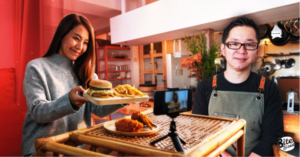
Being a food influencer isn’t just about aesthetics and cravings—it’s about impact. A single feature can change a business overnight (Michelin yarn?!). That’s exciting, but it also means there’s responsibility attached to every post, every list, every “must-try.”
At the end of the day, everything comes back to trust. That’s the real reason people follow food creators—they believe the recommendations are real. That is when something is called “the best,” it actually means something. But if rankings can be bought, that trust fades. And once it’s gone, it’s hard to win back. Every post becomes questionable. Every list feels curated for the wrong reasons. And for creators, that’s a risky place to be, because credibility is what makes people stay.
With Great Influence Comes Big Responsibility
There’s still a way to do this right: be clear about what’s paid, keep picks honest, and respect the difference. Mama Lou’s owner and current RestoPH President David Sison affirmed this concern with a public statement: “RestoPH stands for a simple standard: if it is paid, label it. Sponsored content is a legitimate business model. Undisclosed paid rankings are not.”
Because the food scene isn’t unlimited. Restaurants close. Small players get pushed out. And if things keep leaning toward pay-to-play, we might end up with fewer unique spots, fewer risks, fewer stories worth telling.
One day, it won’t be about who makes it to the list. It’ll be: are there still enough good restaurants left to even make one?
Follow us on Facebook, Instagram, TikTok, and YouTube for foodie finds, re-imagined recipes, and easy eats that will take Pinoy bellies on an adventure!



Leave a Reply