Street food is the go-to merienda and even meal option for lots of Filipinos. From their alluring scents and sweet-savory tastes to the variety of treats and affordable prices, there are really so many options to choose from. For this series of the food almanac, we’ve gathered a few of our favorites:
THE DEEP-FRIED SKEWERS
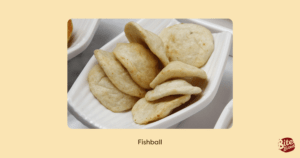
FISHBALL
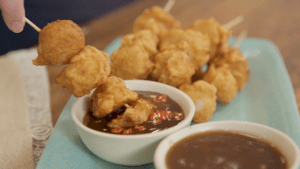
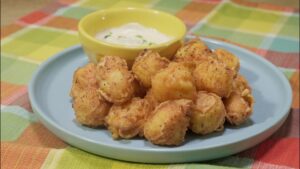
Fishball is one of the popular street food treats, made up of ground fish, aromatics, flour, salt, and pepper. Initially boiled, then fried till golden, this favorite DIY street skewer can be eaten as is, but tradition dictates it to be dipped in the classic manong sauce that comes as sweet or spicy, as well as vinegar. It’s often flat in shape but puffs a bit after frying.
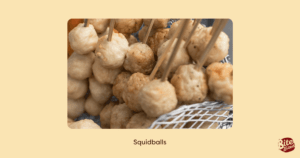
SQUIDBALL
Squidballs are made of puréed squid blended with fish meat and mixed with starch and spices. They are rounder in size, plus elastic and bouncier in texture. They are often added to mains like stir-fry noodles and soups since they make great protein extenders to the dish.
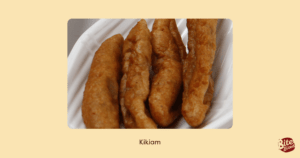
KIKIAM
Kikiam is a deep-fried street food distinct for its ingredients and appearance. It is made from minced meat (either chicken or pork), singakamas, and vegetables seasoned with five-spice powder and other flavorings. The flavored meat is then rolled in a bean curd wrapper and steamed. After the initial cooking method, it is then fried and served with sweet chili sauce. The more familiar street-food version of the kikiam, however, is made with cheaper protein options like fish that’s finely processed with aromatics and starches, then mixed with oyster sauce and soy sauce to get that savory flavor. The mixed dough is then shaped by rolling it between the palm of your hands, then deep-fried.
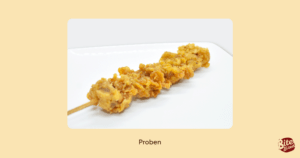
PROBEN
The name of this wickedly good skewer comes from the word proventriculus, an attachment to the gizzard of the chicken. The proben (sometimes proven) is simply seasoned, coated in flour, and deep-fried until golden, resulting in its crispy, chewy texture. It is usually dipped in vinegar and eaten as pulutan.
EGG-Y BITES
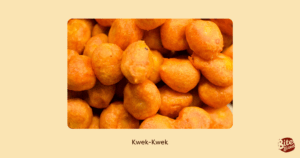
KWEK-KWEK
Crowd favorite Kwek-Kwek is a hard-boiled quail egg coated in a dyed batter that turns bright orange after deep frying. Kwek-kwek, like Fishball, can be eaten as is, dipped in the same sweet-and-salty sauce or vinegar with diced onions and garlic. Another variation of this is the Tokneneng, which is made from hard-boiled duck egg, though some sellers use chicken eggs for economic reasons.
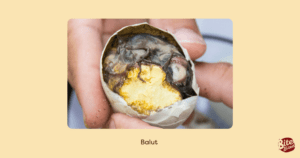
BALUT
Balut may have been rated as the world’s worst egg dish on one food website, but to us Filipinos, it’s one of our most beloved delicacies. A fertilized duck egg is incubated in a dark room for at least 17 days. When ready to be eaten, it is boiled for 30 minutes. To eat a balut, look for the pointed end of the egg to crack and sip the duck consomme. Crack the egg further to consume the rest with a pinch of salt and a few drops of vinegar. Recently, balut got a resurgence on social media when vendors grill it over charcoal and add chili oil for added heat and smokiness.
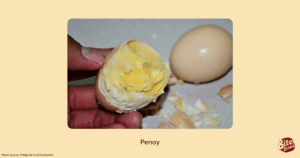
PENOY
If you’re not into balut, then you can enjoy its friendlier version, Penoy. This unfertilized duck egg has a custard-like texture after cooking and has a creamy-savory taste when eaten.
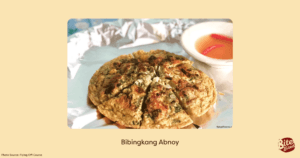
BIBINGKANG ABNOY
This local omelet is unique as it is made from scrambled rotten duck eggs. It can be eaten as is, or if preferred, the strong taste can be tempered with aromatics like onions, tomatoes, and cilantro. It is best enjoyed with a side of banana ketchup or spiced vinegar.
IHAW FAVORITES
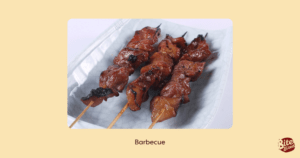
PORK BARBECUE
Pork Barbecue is thin pork slices marinated in soy sauce, calamansi, sugar, banana ketchup, and garlic. The meat is skewered on thin bamboo skewers and then grilled until fully cooked. It is a great viand option for a lazy dinner.
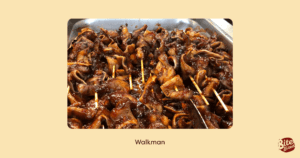
WALKMAN
Walkman is the street slang for pork ears or baboy tenga. Chewy yet tender due to the mix of cartilage and fat on the pig’s ears, pork ears are frequently on the menu of any ihawan.
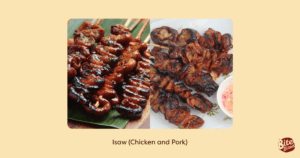
ISAW (CHICKEN AND PORK)
Isaw or intestine comes in two options: chicken or pork. The innards are thoroughly cleaned, then par-boiled with aromatics to get rid of any impurities and bitterness. Afterward, the innards are skewered and then grilled while being brushed with thin coats of marinade to add to that savory taste. For chewier, bigger bites, have the pork, but if you prefer your isaw to be less fatty, then have the chicken.

BETAMAX
Many might know Betamax as a video cassette recorder, but in the Philippines it’s also known as a street food made from coagulated chicken blood that is boiled, then cut into cubes, skewered, and grilled. You can dip this in a vinegar-soy sauce mixture.
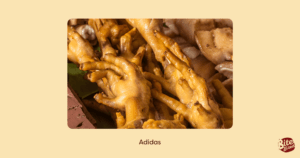
ADIDAS
This chicken street snack got its name because it looks like a famous athletic shoe brand. Also known as chicken feet, this snack can be marinated and grilled over charcoal or cooked as another Philippine delicacy, Adobong Adidas.
MERIENDA STAPLES
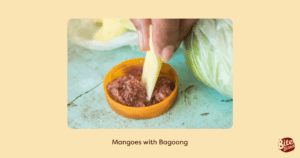
INDIAN MANGO WITH BAGOONG
The tandem of Indian mango and bagoong alamang gets top tier when it comes to weird Pinoy food combinations. Many Filipinos swear by this sour-savory combo, finding bliss when they dip a sliced mango into the salty bagoong.
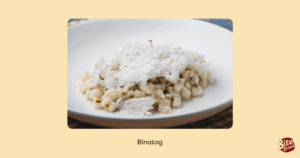
BINATOG
Binatog, bualaw, or kinulti is a corn snack peddled usually as a mid-afternoon treat. White corn kernels are soaked in water until puffed, then boiled down until the skin splits and the consistency and texture become sticky and tender. You can either enjoy it sweet with sugar or salty with a pinch of salt, but the main add-on is a small mound of grated niyog to add texture and taste.
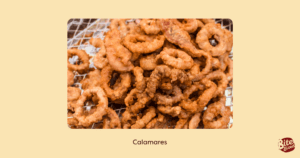
CALAMARES
Philippines’ rendition of the Mediterranean snack Calamari is not that far from the origin. Calamares is sliced squid and tentacles, dipped in tempura batter, then deep-fried until golden brown. This snack can be dipped in mayonnaise, sweet chili, or vinegar.
STREET SWEETS
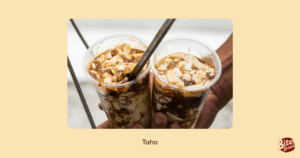
TAHO
Move too slow, you might just miss the peddling taho vendor. But if you catch him, you’ll get the chance to see the fascinating 3-step routine of how a serving of taho is prepared. Taho or soybean curd is silken tofu drizzled with brown sugar syrup and tiny tapioca balls or sago. Many eat it right after ordering, but some prefer to let it chill and eat it cold. Some prefer less arnibal while others prefer their serving drowning in the sauce. In places like Baguio, strawberry-flavored taho is offered. On the other hand, specialty taho vendors already offer non-traditional flavor options like pandan, vanilla, ube, and mango.
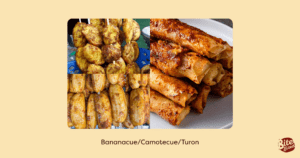
BANANA CUE/ CAMOTE CUE/TURON
Simple yet satisfying, banana cue is a popular sweet street merienda. Vendors prepare this by deep-frying just ripe banana plantains or saba bananas, then sprinkling them with brown sugar, which eventually forms a thick caramel glaze over the soft, warm bananas. They are often sold with kamote cue (a version made with kamote) and turon, a deep-fried spring roll made of plantains, brown sugar, and slivers of sweetened langka.

HALO-HALO
Literally translated as “mix-mix,” halo-halo has become the quintessential Filipino dessert merienda for Filipinos around the globe. Traditional components include gulaman, sago, nata de coco, sweet beans, garbanzos, langka, corn, macapuno, sweetened banana, taro, shaved ice, all drizzled with evaporated milk, then topped with leche flan, ube ice cream, and toasted pinipig. The ingredients are an amalgamation of different influences, each bringing assorted nuances, textures, and flavors to the dessert.

ISKRAMBOL
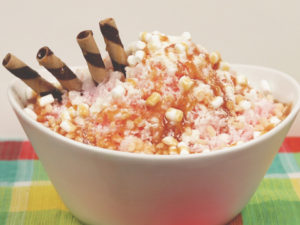
Ice scramble, or more popularly known as iscramble, is a frozen dessert peddled during hot afternoons, most especially during summertime. It is cheaper compared to the halo-halo due to the ingredients used (shaved ice, powdered milk, chocolate syrup, marshmallow, sago, pinipig), making it an excellent treat for kids.

DIRTY ICE CREAM
Compared to commercial ice cream sold in groceries and supermarkets, sorbetes or dirty ice cream are sold on the street at a dirt-low price, hence the name, “dirty”. Peddlers, or sorbeteros, push their ice cream carts holding aluminum ice cream tubs with flavors like ube, keso, macapuno, chocolate, and strawberry. They are either served on sugar cones or in small plastic cups, but if available, do try them as a filling between a fluffy bread bun.
Want to make some elevated street food recipes at home? Enjoy these tried and tested recipes!
What’s your favorite Pinoy street food? Let us know!
Follow us on Facebook, Instagram, Tiktok, and Youtube for foodie finds, re-imagined recipes, and easy eats that will take Pinoy bellies on an adventure!




Leave a Reply